Table of Contents
Many businesses spend time & money bringing visitors to their websites through SEO, social media, & paid advertising. But getting visitors is only one part of online growth.
The bigger challenge is converting those visitors into customers, leads, or subscribers.
This is where CRO (Conversion Rate Optimization) becomes important. CRO helps businesses understand why visitors are not taking action & what changes can improve website performance.
However, many websites face conversion problems because of common mistakes. A website may receive good traffic but still generate fewer leads or sales due to poor user experience, unclear information, or technical issues.
Understanding these factors can help businesses create a better website experience & improve their conversion rate.
What Is Conversion Rate Optimization (CRO)?
A conversion can be:
- Purchasing a product
- Filling out a contact form
- Requesting a service
- Booking an appointment
- Signing up for a newsletter
For example, if 1,000 people visit a website & 50 people make a purchase, the conversion rate is 5%.
CRO helps businesses find ways to increase this percentage by improving website design, content, & user experience.
Why Do Websites Have Low Conversion Rates?
A website can have thousands of visitors but still get poor results. This usually happens because visitors face problems while browsing the website.
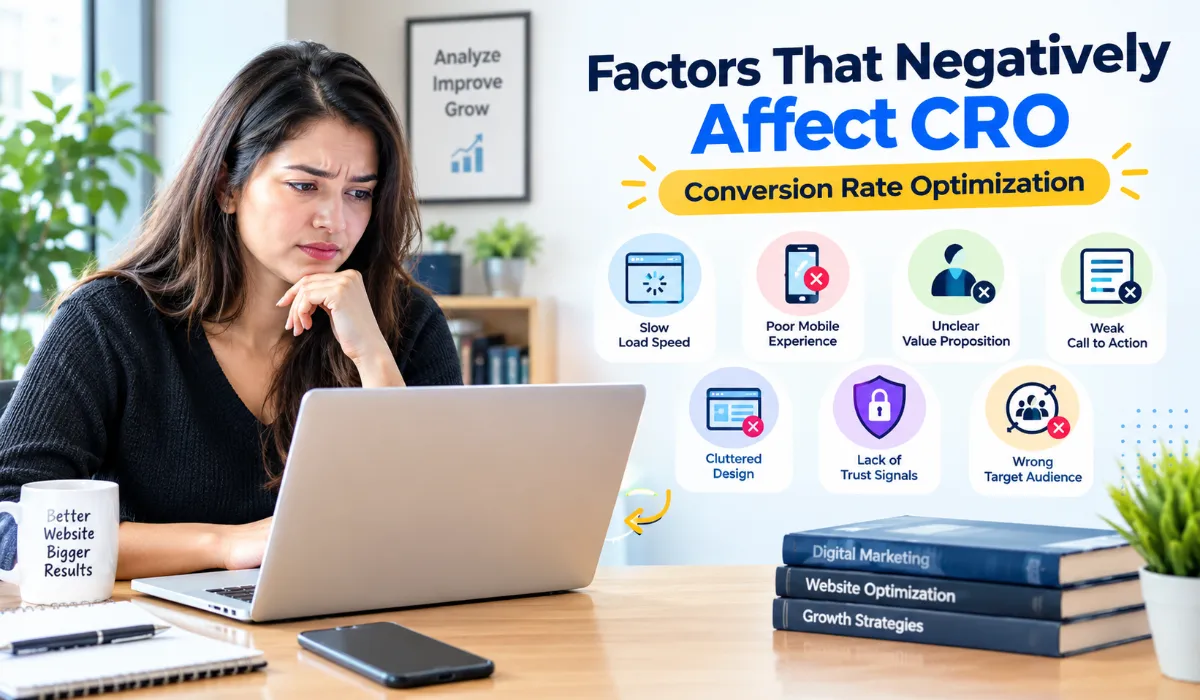
Let’s understand the main factors that negatively affect CRO.
1. Slow Website Loading Speed
Website speed plays a major role in user experience.
Imagine visiting a website & waiting several seconds for a page to open. Many users will leave & search for another option.
A slow website can cause:
- Higher bounce rates
- Fewer inquiries
- Lower sales
- Poor user experience
To improve website speed, businesses should:
- Optimize images
- Remove unnecessary plugins
- Improve website hosting
- Reduce heavy scripts
A faster website creates a smoother experience & helps improve Website Conversion Optimization.
2. Confusing Website Design
A website should make it easy for visitors to find information.
If users can’t understand where to click or where to look crucial details or info, they may leave without taking action.
Common design problems include:
- Too many elements on one page
- Difficult navigation
- Hidden contact information
- Unclear page structure
A simple & clean design helps visitors quickly understand:
- What the business offers
- Why it is useful
- What they should do next
Good design is an important part of User Experience Optimization.
3. Unclear Call-to-Action (CTA)
A CTA tells visitors or intended users what action they should take.
Examples:
- Buy Now
- Contact Us
- Get Free Quote
- Download Guide
Many websites lose customers because their CTAs are unclear or difficult to notice.
A good CTA should be:
- Easy to find
- Simple to understand
- Connected with user needs
For example, “Submit” is less effective than “Get Your Free Consultation.”
4. Poor Landing Page Experience
Landing pages are created to guide visitors toward one specific goal.
A poor landing page can reduce conversions because users may not find the particular info basically they need.
Common landing page issues include:
- Weak headlines
- Too much text
- Missing benefits
- No customer reviews
- No clear action button
Landing Page Optimization helps businesses create pages that match visitor expectations & encourage action.
A good landing page should answer:
- What is being offered?
- How does it help me?
- Why should I trust this business?
- What should I do next?
5. Lack of Trust Signals
Visitors usually do not become customers immediately. They need confidence before taking action.
A website without trust elements may make users hesitate.
Trust-building elements include:
- Customer testimonials
- Reviews
- Case studies
- Secure payment options
- Business information
- Professional images
Building trust can increase customer confidence & improve conversion results.
6. Poor Mobile Experience
Many users browse websites through smartphones. If a website does not work properly on mobile devices, businesses may lose potential customers.
Common mobile problems include:
- Small text
- Slow loading
- Difficult menus
- Hard-to-click buttons
- Poor checkout process
A mobile-friendly website is essential for successful Conversion Optimization.
7. Complicated Forms & Checkout Process
Long forms & complicated steps can frustrate users.
For example, asking visitors to fill out ten fields before contacting a business may reduce the number of completed forms.
Businesses should:
- Keep forms simple
- Ask only necessary information
- Reduce unnecessary steps
- Make checkout easier
A simple process increases the chances of users completing their actions.
8. Not Understanding User Behavior
Many businesses make website changes based on guesses instead of actual data.
Without understanding visitors, it is difficult to know:
- Why users leave
- Which pages create problems
- What information customers need
Using website analytics, heatmaps, and customer feedback can help businesses create a better Conversion Rate Optimization Strategy.
How Businesses Can Improve CRO
To improve conversion rates, businesses should focus on:
- Creating a fast website
- Improving page design
- Writing clear content
- Adding strong CTAs
- Building trust
- Testing different strategies
- Improving mobile experience
CRO is not a one-time activity. Regular testing & improvements help websites perform better over time.
Bottom of The Line
Conversion Rate Optimization (CRO) helps businesses get better results from their existing website visitors. However, factors like slow speed, confusing design, weak CTAs, poor landing pages, & lack of trust can reduce conversions.
By understanding user needs & improving the overall website experience, businesses can encourage more and more visitors to take action.
A successful CRO strategy is not about forcing users to convert. It is about creating a website experience that is simple, useful, & valuable for visitors.