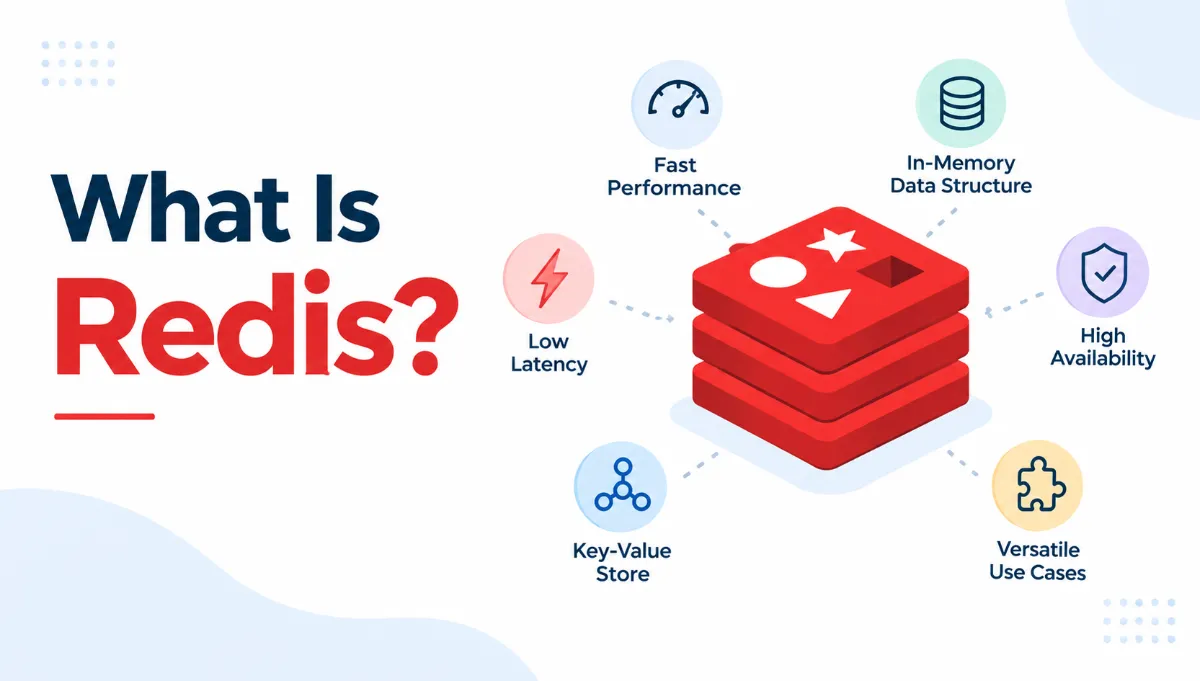
When you open a website or use an app, you expect everything to work quickly. Pages should load instantly, searches should show results without delay, and actions like login, payments, or messaging should happen smoothly.
But behind the scenes, websites and applications handle thousands or even millions of requests every second. To keep things fast, developers use technologies like Redis.
So, what is Redis, and why do so many companies use it?
Let’s understand Redis in a simple way.
What Is Redis?
The word “in-memory” means Redis stores data in the computer’s RAM instead of relying only on traditional storage like hard drives. Since RAM is much faster, Redis can deliver data almost instantly.
Redis is commonly used for:
- Website caching
- Improving application speed
- User session storage
- Real-time notifications
- Data processing
- Message management
In simple words, Redis works like a fast temporary storage space that keeps frequently needed information ready whenever an application needs it.
Why Do Websites Use Redis?
Imagine you visit an online shopping website. Thousands of users may be viewing the same products at the same time.
Without caching, every user request has to go directly to the main database. When traffic increases, this can slow down the website.
With a Redis cache, frequently used information can be stored temporarily. When someone requests the same data again, Redis provides it quickly without asking the database every time.
This helps websites:
- Load pages faster
- Handle more visitors
- Reduce server pressure
- Improve user experience
How Does Redis Work?
A simple example can help you understand Redis.
Suppose a user opens a website:
Without Redis:
User → Website → Database → Website Response
Every request goes to the database, which takes more time.
With Redis:
User → Website → Redis Cache → Quick Response
If the required information is already stored in Redis, the website can show it much faster.
For example, a news website may store popular articles in Redis. Instead of searching the database every time someone opens those articles, Redis can instantly provide the saved information.
Why Is Redis So Popular?
1. Website Caching
One of the most popular uses of Redis is caching.
Websites use Redis to store frequently requested data such as:
- Product information
- Blog posts
- User preferences
- API responses
- Search results
This reduces repeated database requests and helps improve website performance.
2. User Session Management
Many websites need to remember user information while they are logged in.
Redis can store:
- Login sessions
- Shopping cart details
- User settings
For example, when you add products to an online shopping cart, Redis can help maintain that information quickly.
3. Real-Time Applications
Some applications need instant updates. Redis is commonly used for real-time features like:
- Chat applications
- Live notifications
- Online gaming scores
- Real-time tracking systems
Because Redis can process data very quickly, it works well for applications where speed matters.
4. API Performance Improvement
Modern websites and apps often depend on APIs to exchange information. Redis can store frequently requested API responses, helping applications respond faster.
This reduces the workload on servers and creates a smoother experience for users.
Redis vs Traditional Database: What Is the Difference?
Redis and traditional databases are not competitors in every situation. They usually work together.
A traditional database like MySQL or PostgreSQL is mainly used for storing permanent information, such as:
- Customer records
- Orders
- Product details
- Account information
Redis focuses more on speed and temporary data storage.
| Redis | Traditional Database |
|---|---|
| Stores data in memory | Stores data on disk |
| Very fast data access | Designed for long-term storage |
| Great for caching and real-time use | Great for structured data |
| Handles frequent requests quickly | Handles complex queries |
Many large websites use both systems together to get the benefits of speed and reliable storage.
Benefits of Using Redis
Redis provides several advantages for websites and applications:
Faster Loading Speed
Since Redis retrieves data from memory, applications can respond much faster.
Better User Experience
Fast websites keep users engaged and reduce frustration caused by slow loading times.
Handles High Traffic
Redis helps websites manage large numbers of users without putting too much pressure on the main database.
Reduces Server Load
By storing frequently used information, Redis reduces unnecessary database requests.
Is Redis a Database?
Yes, Redis is considered a database, but it works differently from traditional databases.
It is often called an in-memory NoSQL database because it stores information using key-value pairs instead of tables and rows.
Redis supports different types of data, including:
- Strings
- Lists
- Sets
- Hashes
- Sorted sets
This flexibility makes Redis useful for many different types of applications.
Bottom of The Line
Redis has become an important technology for websites and applications that need speed, reliability, and better performance.
From improving website loading times with Redis cache to powering real-time applications, Redis helps web developers create faster digital experiences.
Whether you are running a high-traffic website, an online store, or a modern application, Redis can play an important role in improving performance and delivering a smoother experience for users.
People Also Asked
Q. Is Redis a database or a cache?
A. Redis can work as both a database and a cache. It is an in-memory NoSQL data store that is commonly used as a caching layer to improve speed and reduce database load.
Q. How does Redis cache improve website speed?
A. Redis cache stores frequently requested data in memory, allowing websites to retrieve information faster without repeatedly querying the main database. This helps improve loading speed and user experience.
Q. What is the difference between Redis and MySQL?
A. Redis is designed for fast data access and caching, while MySQL is a traditional relational database used for storing structured data permanently. Many applications use both together for better performance.
Q. Is Redis free to use?
A. Yes, Redis is open-source and can be used freely. Businesses can also choose managed Redis services that provide additional features, monitoring, and support.
Q. Why do developers use Redis?
A. Developers use Redis because it is fast, flexible, and helps applications handle high traffic. It is commonly used for caching, real-time features, user sessions, and reducing server workload.
Q. Can Redis improve website performance and SEO?
A. Redis can indirectly support SEO by improving website speed and user experience. Faster websites can provide better Core Web Vitals performance, which is an important part of technical website optimization.